
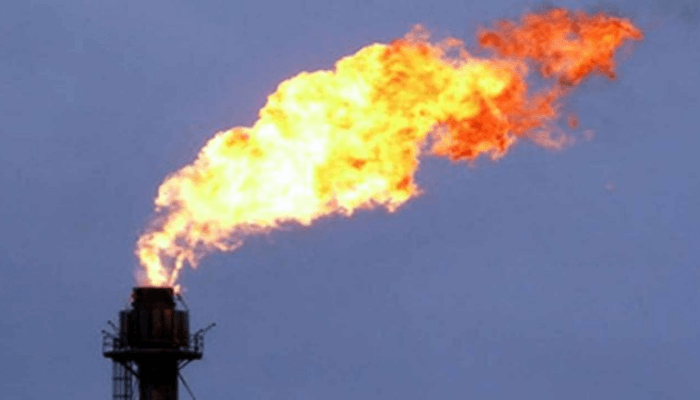
The federal government is setting the stage for a significant economic boost, anticipating an injection of $2 billion in investments through the Nigerian gas flare commercialisation program.
This optimism comes as the Nigerian Upstream Petroleum Regulatory Commission (NUPRC) on Friday, issued to access flare gas site to 28 successful bidders.
Speaking at the event held in Abuja, Gbenga Komolafe, Commission Chief Executive, NUPRC said that by allocating flare sites to competent third-party developers, the government has activated the commercially viable model, in which waste flare gas becomes value and environmental challenges give way to investment opportunities.
The program, he said is aligned with Nigeria’s Energy Transition Plan, which outlines the national pathways towards a cleaner, more resilient energy system.
Komolafe explained that the NGFCP is not merely a policy initiative, but a pillar in the nation’s quest to eliminate routine flaring, reduce emissions, and enhance Nigeria’s global credibility in energy transition commitments.
He said, “The NGFCP provides tangible value to producers, including elimination of flare payment obligations, reduction of environmental and operational liabilities, improved ESG performance, strengthening attractiveness to investors and global financiers, and alignment with the federal government’s decarbonization agenda.
“After the disruptions of COVID-19 and following the enactment of the PIA, it was necessary to restructure the NGFCP to reflect the prevailing realities. This effort enhanced commercial viability and regulatory consistency. From 300 initial expressions of interest, 139 applicants qualified for the RFP stage.
“Following a competitive and transparent evaluation process, 42 successful bidders were awarded 49 flare sites, an achievement widely recognized for its integrity. Today, we are pleased to announce that 28 awardees have fully executed the required set of commercial agreements. It is indeed a milestone, which includes the commercial agreements, the milestone development agreements, and gas sales agreements.
“And now, they are qualified to receive the permit to access flare dust. These entities represent a strong blend of operational capability, financial readiness, and technological competence. To all our flare site awardees, soon to become permit holders, I offer warm congratulations to you all.
While commending the awardees, Komolafe urged that engineering construction financing commissioning must begin in earnest. He assured that the commission remains fully committed to providing the needed regulatory support to the awardees to meet their timelines and obligations.
He emphasized that capturing gas flare will support power generation, petrochemicals, fertilizers, LPG penetration, and feedstock supply to local industries. He added that beyond commercial gains, this project will also strengthen close community relations, improve operators’ social license to operate, build local content capacity, and stimulate job creation.
“In addition, investors stand to benefit from diversified revenue streams, carbon credit earnings, and long-term gas monetization opportunities, while simultaneously enhancing their sustainability credentials.
“A total of 49 flare sites have been auctioned. 42 bidders have been awarded the sites. Between 250 and 300 million scores of currently flared gas will be captured and commercialized, eliminating approximately 6 million tons of CO2 emissions annually.
“The program is expected to attract up to $2 billion in investment, more than 100,000 direct and indirect jobs are projected to be created. About 170,000 metric tons of LPG are estimated to be produced annually, enabling clean energy access for approximately 1.4 million households.
“And nearly 3 gigawatts of power generation potentially will be unlocked. An NGFCBE forum and college of awardees has been established to support project implementation and knowledge exchange. We have also deepened engagement with international financiers and technology partners,” Komolafe said.
In his remarks, Kelechi Onyekachi Ofoegbu, Executive Commissioner, Corporate Services & Administration, NUPRCz said that program’s architecture and design integrates market-aligned incentives with robust environmental requirements, thereby ensuring that rare gas is converted into economically valuable streams such as power, LPG, petrochemicals, and industrial feedstock.
He also noted that the NGFCP is designed to attract competent entities capable of utilising flare gas for real economic impact. He added that the program seek to eliminate routine flaring while expanding domestic gas utilisation, enhancing Nigeria’s energy security, and supporting the development of gas-based industries.
“This moment reflects both national progress and industry evolution, and is a clear demonstration of what collective progress, disciplined regulation, and strong leadership can achieve.
“The 2022 relaunch of the NGFCP established a clear commercially structured and technologically driven pathway for capturing and monetising rare gas. It also reflects a deliberate shift from legacy practices towards a modern regulation framework that strengthens investor confidence and promotes industry accountability,” he said.
Speaking further, Ofoegbu urged the awardees to remain focused on in implementing the program, stating that the success of the programme relies on their collective ability to deploy infrastructure, capture flare gas efficiently, and convert it into valuable products, deliver environmental benefits, and ensure sustainable socio-economic impact across host communities
“The programme aligns with the National Energy Transition Plan by promoting clean fuels and reducing emissions from upstream operations. It also improves operational efficiency, enhances ESG performance, and opens new investment opportunities for both local and international stakeholders,” he added.