
News Power

Relief as Dangote cuts petrol to N699/litre

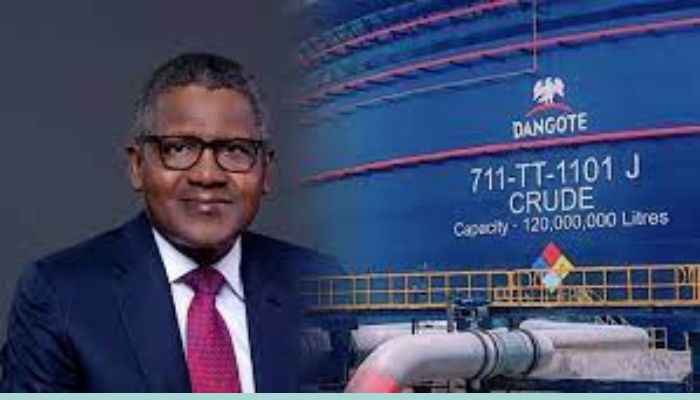
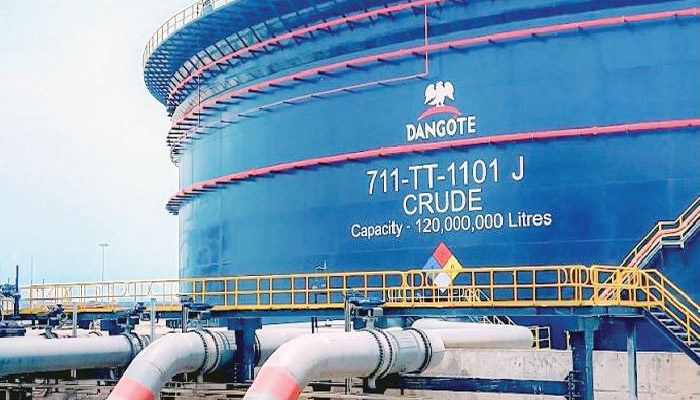
Nigerians will heave a sigh of relief as Dangote Refinery cut its ex-depot petrol price to N699 per litre on December 11.

The latest reduction, down from N828 per litre, represents a 15.58 percent drop and marks the refinery’s 20th price adjustment this year. On the other hand, the move compounds mounting pressure on traditional importers and depot operators who have already seen margins evaporate amid an aggressive pricing war that began in late 2024.

Industry watchers warn that depot owners and business networks built around importation face idle facilities and financial strain as the 650,000-barrel-per-day Lekki facility flexes its pricing power. Several private depots moved swiftly to align with Dangote’s new benchmark, with Sigmund Depot dropping its rate by N4, while TechnoOil implemented a sharper N15 cut.

“The margins are shrinking by the day,” said Tosin Akinbobola, a Lagos-based fuel distributor who requested anonymity. “Dangote has access to better economies of scale and a more efficient refining process. We simply can’t match their prices without incurring significant losses.”

Data from Nigeria’s central bank shows the country spent $1.26 billion on petroleum imports in the first quarter of 2025, even as Dangote’s output increased. Yet marketers imported 2.28 billion litres between January and March, underscoring the complex dynamics as traditional players fight to maintain relevance.

The price reduction follows a recent meeting between refinery chairman Aliko Dangote and President Bola Tinubu on December 6, during which the billionaire industrialist reaffirmed his commitment to maintaining competitive domestic fuel prices despite global market volatility and persistent cross-border smuggling.

“Prices are going down. The reason why prices have to go down is that we have to also compete with imports,” Dangote stated after the presidential meeting, emphasising that Nigeria’s fuel prices remain substantially lower than neighbouring West African countries, where petrol sells between N1,500 and N1,600 per litre.

The latest adjustment has triggered immediate market responses across Nigeria’s downstream petroleum sector. Several private depot operators, including A.A. Rano, NIPCO, and Aiteo, have begun aligning their rates with Dangote’s new pricing template, according to industry sources. The Nigerian National Petroleum Company Limited has also reduced pump prices twice in recent weeks, with retail rates in Abuja now ranging between N915 and N937 per litre.

Industry analysts suggest the frequent price adjustments reflect a fundamental shift in Nigeria’s fuel distribution landscape. The traditional marketers’ consortium model appears to be declining as individual operators negotiate directly with the refinery, enabling faster price adjustments and broader market penetration.

The $19 billion Dangote refinery, which commenced operations in 2023, has a processing capacity of 650,000 barrels per day, exceeding Nigeria’s entire domestic fuel demand. Company officials indicated the latest price cut aims to ease transportation costs for road transport operators and make the festive season more affordable for ordinary Nigerians.

Dangote noted that smuggling has declined, though not entirely stopped, as the refinery’s competitive pricing reduces arbitrage opportunities along Nigeria’s porous borders. The industrialist emphasised that the company is pursuing long-term market stabilisation rather than immediate investment recovery.

Transport sector stakeholders are expected to benefit significantly from the reduction, potentially translating to lower fares for passengers during the peak holiday travel period. The price cut also pressures fuel importers and NNPC Limited to further adjust their rates to remain competitive in Nigeria’s evolving petroleum market.

With retail prices potentially dropping to around N600 per litre at some filling stations for the first time in years, Nigerian consumers are witnessing tangible relief from fuel costs that have remained stubbornly elevated throughout 2025.

The refinery’s aggressive pricing strategy could reshape Nigeria’s downstream petroleum sector, ending decades of supply instability and fuel queues that have plagued Africa’s largest economy since the 1970s.

News Power

FG eyes $2bn investments as 28 bidders clinch permits to flare sites

The federal government is setting the stage for a significant economic boost, anticipating an injection of $2 billion in investments through the Nigerian gas flare commercialisation program.

This optimism comes as the Nigerian Upstream Petroleum Regulatory Commission (NUPRC) on Friday, issued to access flare gas site to 28 successful bidders.

Speaking at the event held in Abuja, Gbenga Komolafe, Commission Chief Executive, NUPRC said that by  allocating flare sites to competent third-party developers, the government has activated the commercially viable model, in which waste flare gas becomes value and environmental challenges give way to investment opportunities.

The program, he said is aligned with Nigeria’s Energy Transition Plan, which outlines the national pathways towards a cleaner, more resilient energy system.

Komolafe explained that the NGFCP is not merely a policy initiative, but a pillar in the nation’s quest to eliminate routine flaring, reduce emissions, and enhance Nigeria’s global credibility in energy transition commitments.

He said, “The NGFCP provides tangible value to producers, including elimination of flare payment obligations, reduction of environmental and operational liabilities, improved ESG performance, strengthening attractiveness to investors and global financiers, and alignment with the federal government’s decarbonization agenda.

“After the disruptions of COVID-19 and following the enactment of the PIA, it was necessary to restructure the NGFCP to reflect the prevailing realities. This effort enhanced commercial viability and regulatory consistency. From 300 initial expressions of interest, 139 applicants qualified for the RFP stage.

“Following a competitive and transparent evaluation process, 42 successful bidders were awarded 49 flare sites, an achievement widely recognized for its integrity. Today, we are pleased to announce that 28 awardees have fully executed the required set of commercial agreements. It is indeed a milestone, which includes the commercial agreements, the milestone development agreements, and gas sales agreements.

“And now, they are qualified to receive the permit to access flare dust. These entities represent a strong blend of operational capability, financial readiness, and technological competence. To all our flare site awardees, soon to become permit holders, I offer warm congratulations to you all.

While commending the awardees, Komolafe urged that engineering construction financing commissioning must begin in earnest. He assured that the commission remains fully committed to providing the needed regulatory support to the awardees to meet their timelines and obligations.

He emphasized that capturing gas flare will support power generation, petrochemicals, fertilizers, LPG penetration, and feedstock supply to local industries. He added that beyond commercial gains, this project will also strengthen close community relations, improve operators’ social license to operate, build local content capacity, and stimulate job creation.

“In addition, investors stand to benefit from diversified revenue streams, carbon credit earnings, and long-term gas monetization opportunities, while simultaneously enhancing their sustainability credentials.

“A total of 49 flare sites have been auctioned. 42 bidders have been awarded the sites. Between 250 and 300 million scores of currently flared gas will be captured and commercialized, eliminating approximately 6 million tons of CO2 emissions annually.

“The program is expected to attract up to $2 billion in investment, more than 100,000 direct and indirect jobs are projected to be created. About 170,000 metric tons of LPG are estimated to be produced annually, enabling clean energy access for approximately 1.4 million households.

“And nearly 3 gigawatts of power generation potentially will be unlocked. An NGFCBE forum and college of awardees has been established to support project implementation and knowledge exchange. We have also deepened engagement with international financiers and technology partners,” Komolafe said.

In his remarks, Kelechi Onyekachi Ofoegbu, Executive Commissioner, Corporate Services & Administration, NUPRCz said that program’s architecture and design integrates market-aligned incentives with robust environmental requirements, thereby ensuring that rare gas is converted into economically valuable streams such as power, LPG, petrochemicals, and industrial feedstock.

He also noted that the NGFCP is designed to attract competent entities capable of utilising flare gas for real economic impact. He added that the program seek to eliminate routine flaring while expanding domestic gas utilisation, enhancing Nigeria’s energy security, and supporting the development of gas-based industries.

“This moment reflects both national progress and industry evolution, and is a clear demonstration of what collective progress, disciplined regulation, and strong leadership can achieve.

“The 2022 relaunch of the NGFCP established a clear commercially structured and technologically driven pathway for capturing and monetising rare gas. It also reflects a deliberate shift from legacy practices towards a modern regulation framework that strengthens investor confidence and promotes industry accountability,” he said.

Speaking further, Ofoegbu urged the awardees to remain focused on in implementing the program, stating that the success of the programme relies on their collective ability to deploy infrastructure, capture flare gas efficiently, and convert it into valuable products, deliver environmental benefits, and ensure sustainable socio-economic impact across host communities
“The programme aligns with the National Energy Transition Plan by promoting clean fuels and reducing emissions from upstream operations. It also improves operational efficiency, enhances ESG performance, and opens new investment opportunities for both local and international stakeholders,” he added.

News Power

Who is Ahmed Farouk, the NMDPRA chief at the centre of Dangote’s allegations

It began with a number and a charge sharp enough to jolt Nigeria’s oil industry.

Ahmed Farouk is the pioneer and serving chief executive officer of the Nigerian Midstream and Downstream Petroleum Regulatory Authority NMDPRA, the powerful institution charged with regulating Nigeria’s midstream and downstream petroleum operations under the Petroleum Industry Act 2021.

An engineer by training, Farouk is a career oil and gas professional with nearly four decades of experience across Nigeria’s petroleum industry and international energy markets. He holds a degree in engineering technology from Southern Illinois University Carbondale in the United States and has attended several executive, management and leadership programmes across Europe and North America during a career spanning more than 35 years.

Farouk began his professional journey far from Nigeria’s oil fields, working as a logic board verification engineer at Apple Computer Inc. in Dallas, Texas. He later returned to Nigeria, where he rose through the ranks of the Nigerian National Petroleum Company system, occupying some of its most senior commercial and operational positions.

Over the years, he has served as manager in the crude oil marketing division of NNPC, senior crude oil trader at Duke Oil Inc., managing director of NiDAS Marine Limited, an NNPC and Daewoo Korea joint venture, executive director, commercial at the Pipelines and Products Marketing Company PPMC, and managing director of PPMC. He also served as executive secretary of the Petroleum Products Pricing Regulatory Authority PPPRA and as special adviser on downstream matters to Maikanti Baru, former group managing director of NNPC.

Farouk is a fellow of the Nigerian Society of Engineers, a member of the Institute of Electrical and Electronics Engineers in the United States, and a registered engineer with the Council for the Regulation of Engineering in Nigeria. Supporters describe him as a technocrat shaped by years of exposure to crude trading, product marketing and regulatory administration.

This depth of experience positioned him for the task of implementing the Petroleum Industry Act, which dismantled old regulatory structures and created the NMDPRA as a central authority for Nigeria’s midstream and downstream petroleum governance.

In December 2023, Farouk’s leadership was projected on a global stage when the NMDPRA told delegates at the United Nations Climate Change Conference COP28 that Nigeria could attract up to $575 billion in energy and infrastructure investments through regulatory reform, sustainability initiatives and private sector collaboration.

That reputation for technocratic authority would later collide with one of the most high-profile corporate figures in Africa, pushing Farouk from regulatory boardrooms into the heart of a national controversy.

A history of controversy

The most intense controversy of Farouk’s tenure erupted in 2025, when Aliko Dangote publicly accused him of conduct that went far beyond regulatory disagreement.

On Monday, Dangote alleged that Farouk spent about $5 million on the secondary education of his four children in Switzerland, an expenditure he described as economic sabotage and corruption. According to Dangote, the children Faisal Farouk, Farouk Jr, Ashraf Farouk and Farhana Farouk attended Montreux School, Aiglon College, Institut Le Rosey and La Garenne International School over a six-year period.

Dangote said his estimates covered tuition, living expenses, air travel and general upkeep, placing the annual cost per child at about $200,000. Multiplied across four children and several years, he argued, the figure rose to roughly $5 million. He also detailed what he described as tertiary education expenses, claiming that university-level tuition, upkeep and travel averaged $125,000 per year over four years per child, amounting to about $2 million for all four. He further alleged that Faisal Farouk completed an MBA at Harvard in 2025 for roughly $220,000

“Nigerians deserve to know the source of this money,” Dangote said, contrasting the figures with conditions in Sokoto State, where many parents, he noted, struggle to pay as little as ten thousand naira in school fees.

The allegations were accompanied by broader claims about regulatory conduct. Speaking at a press conference at the Dangote Petroleum Refinery in Ibeju Lekki, Lagos State, Dangote accused the leadership of the NMDPRA of colluding with international traders and oil importers to frustrate domestic refining. He claimed that import licences covering about 7.5 billion litres of petrol had been issued for the first quarter of 2026 despite the availability of significant local refining capacity.

“I am not calling for his removal, but for a proper investigation,” Dangote said. “If he denies it, I will publish what was paid and take legal steps to compel the schools to disclose the payments.”

From that moment, Farouk moved from being a powerful but largely technocratic regulator to the centre of a public storm, as regulatory disagreements over fuel imports and market control merged with public questions about personal wealth and accountability

The Dangote allegations were built on earlier tensions between the regulator and Nigeria’s largest private refinery. In 2024, disputes between the NMDPRA and Dangote Refinery had already spilled into the public arena after Farouk criticised local refineries, including Dangote’s, suggesting that some produced inferior products compared with imports. He also warned against what he described as the risk of monopoly if oil marketers were compelled to rely exclusively on one domestic refinery.

Dangote strongly rejected those claims, and the disagreement reached the National Assembly, where the House of Representatives adopted a motion urging Farouk’s suspension over what lawmakers described as unguarded and unprofessional comments. The call was later overtaken by procedural and legal arguments around tenure protection under the Petroleum Industry Act.

Political criticism has also followed him. In 2023, Haruna Garus Gololo, an All Progressives Congress chieftain in Bauchi State, publicly questioned Farouk’s appointment, arguing that his long NNPC career linked him to the failures of Nigeria’s state refineries.

“Ahmed Farouk was in the NNPC. He was part and parcel of why the refineries are not working,” Gololo said


By 2025, pressure intensified outside parliament. Coalitions of lawyers, civil society groups and religious leaders staged protests in Abuja, accusing Farouk of corruption, abuse of office and regulatory compromise. Some allegations echoed Dangote’s claims, including the diversion of millions of dollars to fund foreign education for his children and the alleged recruitment of his son into Oando, a company under NMDPRA regulation.

Protesters carried their demands to foreign missions, submitting petitions to the United States and Swiss embassies and calling for international scrutiny. “The allegations are serious and warrant a thorough investigation,” said Dan Okwa of the Concerned Young Professionals Network. “The Nigerian public deserves transparency and accountability.”

Defence and pushback

The NMDPRA has consistently rejected the accusations. In July 2025, the authority dismissed what it called a smear campaign against its chief executive, describing the allegations as baseless and politically motivated. It pointed to multiple layers of oversight, including audits, National Assembly scrutiny and the Office of the Auditor General.

Since assuming office, the agency said, Farouk has focused on implementing the Petroleum Industry Act and driving reforms that have helped attract nearly $20 billion in investment into the sector.

“These calls for resignation are filled with baseless declarations and no specific accusations. This alone shows their frivolity,” the Authority stated.

Institutional backing followed. The House of Representatives downstream committee later dismissed calls for Farouk’s removal, warning that ignoring the tenure protections in the Petroleum Industry Act would undermine investor confidence and legal certainty.

“The committee is not saying that investigating agency should not diligently carry out its function or prosecute any person found to have breached the law but the committee is completely against any idea that the PIA provisions can be dus-tbined and its provision ignored and that a regulatory body leader can be removed without due process and that once that culture is back, then it will send a wrong signal to the international committee of investors in the petroleum sectors to now feel that it is risky investing in a country where respect to the law can’t be guaranteed”

“So on that ground the Committee is dismissing those calls as not being in line with relevant provisions of the PIA which has physically made provisions for tenure duration and also the allegations about the budget of the agency are ridiculous because some of those allegations were way above the entire capitals provision in the budget, So if an amount that is alleged to have been misappropriated is above the budget capital provision, how could you have said someone stole what was not even exiting?”

The National Association of Nigerian Students, which had earlier accused Farouk of mismanagement and abuse of office, issued a public apology, admitting that its claims were based on unverified information.

“The allegations were based on unverified information. As the mouthpiece of over 40.2 million Nigerian students, both at home and in the diaspora, NANS is committed to upholding the values of truth, fairness, and constructive engagement.

“I sincerely apologise for any inconvenience or harm caused by the earlier statement and urge all stakeholders to remain focused on constructive dialogue and the shared goal of building a better Nigeria,” they wrote.


A profile still unfolding

For now, Farouk remains in office, presiding over one of Nigeria’s most sensitive regulatory institutions at a time of profound change in the energy sector. The allegations levelled by Africa’s richest businessman have not resulted in formal charges, but they have reshaped public perception and intensified scrutiny of regulatory power.

As Dangote put it, “What is happening amounts to economic sabotage.”

News Power

Solar energy: Experts push $2.5billion carbon market opportunity for Nigeria

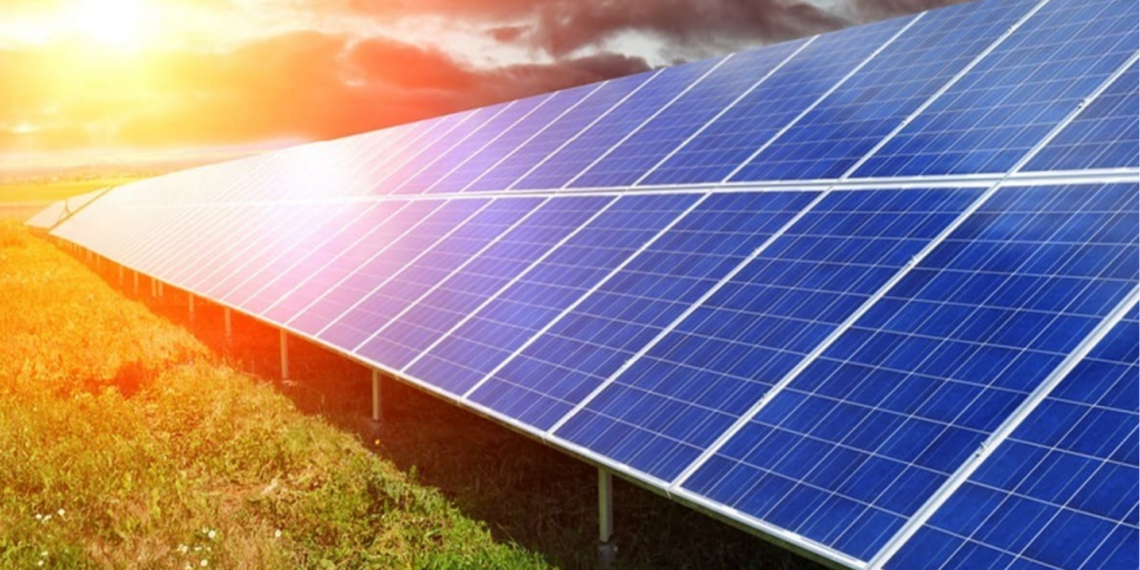
Energy and climate experts have urged the Federal Government to deepen investments and introduce stronger policy incentives for large-scale solar installations nationwide, noting that such efforts could unlock an estimated $2.5 billion carbon market opportunity for the country.

In separate interviews with Nairametrics, experts emphasized that solar expansion remains the most viable route to reducing emissions, achieving the nation’s net-zero target by 2060, and positioning Nigeria as a major player in the fast-growing global carbon credit market, valued at over $100 billion annually.

They argue that widespread solar deployment would not only cut dependence on fossil fuels but also generate thousands of green jobs, improve rural electrification, and boost Nigeria’s participation in international carbon trading.

Solar energy as Nigeria’s entry point into the carbon economy 

According to Dr. Sunday Okoro, an Abuja-based renewable energy consultant, solar energy represents Nigeria’s fastest route to monetizing emission reductions through international carbon trading mechanisms.

“Every ton of carbon dioxide avoided through solar generation can be quantified and traded as carbon credits,” Dr. Okoro explained.  

“Nigeria stands to gain significantly if it mainstreams solar projects in residential, commercial, and industrial sectors,” he added. 

He noted that an enabling policy environment comprising tax incentives for solar adopters, simplified licensing, and clear carbon credit certification rules would attract private investment and deepen Nigeria’s carbon market participation.

Similarly, the Managing Director of SolarTech Renewables Ltd, Mrs. Aisha Bulila, pointed out that Nigeria’s exceptional solar potential remains largely underutilized.

“We are sitting on one of the highest solar irradiation belts in the world, yet our installed capacity is less than 2% of national demand. 

“If we scale up installations, we can drastically reduce reliance on diesel generators and qualify for significant carbon revenue,” she said. 

Policy execution and the need for scale 

Nigeria’s Energy Transition Plan (ETP) outlines a roadmap to achieve net-zero emissions by 2060, but experts say implementation remains slow, particularly in rural electrification and off-grid solar.

  • Data from the Rural Electrification Agency (REA) indicates that the country needs at least 5 million off-grid solar systems to serve unpowered and underserved communities.
  • Experts estimate that deploying just half of that target could generate millions of certified emission reductions (CERs) annually—each tradable for foreign exchange and investment inflows.

Mr. Ibrahim Danjuma, a policy analyst with the African Clean Energy Initiative, said Nigeria’s carbon market potential will remain underexploited until renewable energy projects are fully integrated into the national emissions accounting system.

“The voluntary carbon market can bring in billions if Nigeria quantifies its avoided emissions. But that requires data transparency, project validation, and robust monitoring systems. Solar expansion is the easiest entry point,” Danjuma said.  

He noted that while the Nigeria Carbon Market Activation Plan, inaugurated in 2023 provides a framework for domestic carbon credit certification, implementation must now be backed by practical incentives and large-scale renewable projects to attract investors.

Carbon finance as a driver for renewable investment 

Industry players agree that carbon finance could be the missing link between renewable viability and commercial scalability.

  • According to Temidire Fajuyi, a clean energy investor, carbon finance could be the game-changer that makes solar not just environmentally viable but commercially irresistible.
  • He added that this strengthens the business case, attracts foreign capital, and drives faster adoption.
  • Experts further note that Nigeria’s renewable energy transition could yield multiple economic benefits spanning job creation, foreign exchange inflows, and energy security, while positioning the country as a regional hub for climate-smart investment.

“The global carbon market is expanding rapidly,” Dr. Okoro warned. “If Nigeria doesn’t accelerate its solar adoption and integrate emissions accounting, we risk missing out on a $2.5 billion opportunity.” 

Addressing integrity and verification challenges 

Despite its potential, experts caution that the credibility of Nigeria’s carbon market will depend on integrity and transparency.

The global carbon trade has faced scrutiny for “phantom credits” projects that claim emission reductions without a measurable impact.

Dr. Adaobi Eke, a climate finance consultant, emphasized the need for robust Measurement, Reporting, and Verification (MRV) systems to ensure that every carbon credit issued reflects real, quantifiable savings.

“The world is willing to pay for high-quality credits, but integrity is non-negotiable. Nigeria’s registry must meet international standards, or buyers will look elsewhere,” she said. 

Dr. Eke recommended that Nigeria’s carbon registry adopt internationally recognized protocols such as Verra’s Verified Carbon Standard (VCS) and Gold Standard certification, both of which ensure high-integrity credit issuance.

FG’s regulatory push and investment momentum 

The Federal Government, through the Nigerian Electricity Regulatory Commission (NERC), has begun to acknowledge the growing commercial potential of solar adoption.

  • NERC recently proposed a regulation that would allow solar power users to sell excess electricity back to the national grid, an initiative expected to improve investment returns and grid stability.
  • According to NERC, Nigeria imported over 4 million solar panels in 2023, valued at about $200 million. By early 2025, solar panel imports reached N125.29 billion, reflecting a sharp increase in renewable adoption across rural and peri-urban areas.
  • The regulator also confirmed that Nigeria added 63.5 megawatts (MW) of new solar capacity in 2024, bringing the country’s total installed solar capacity to 385.7 MW. While modest, analysts view this as a sign of rising momentum driven by both public and private sector participation.

Renewed political commitment to carbon markets 

In a policy shift signaling stronger climate finance ambition, President Bola Tinubu recently approved the National Carbon Market Framework, operationalized the Climate Change Fund, and restored the National Council on Climate Change (NCCC) to the federal budget line.

According to Stanley Nkwocha, Senior Special Assistant to the President on Media and Communications (Office of the Vice President), the framework aims to establish and manage Nigeria’s participation in carbon markets, unlocking between $2.5 billion and $3 billion annually over the next decade.

The move, announced ahead of the 2025 UN Climate Change Conference (COP30) in Brazil, aligns with the administration’s commitment to position Nigeria as a leading destination for carbon finance and clean energy investments in Africa.

Earlier in April, Tinubu confirmed that Nigeria’s Carbon Market Activation Policy would serve as the foundation for mobilizing up to $2.5 billion in high-integrity carbon credits by 2030. The plan also seeks to incentivize local renewable energy developers through simplified carbon registration and international credit trading access.

While Nigeria’s clean energy policies and frameworks are taking shape, experts insist that implementation speed will determine whether the country captures its carbon finance potential or lags behind regional competitors like Kenya and South Africa.

News Power

NUPRC rejects N8.4tr oil theft report, says crude losses down 90%

The Nigerian Upstream Petroleum Regulatory Commission (NUPRC) has dismissed a report alleging that Nigeria lost N8.41 trillion to oil theft between 2021 and 2025, insisting that crude oil losses have dropped by more than 90 percent over the period.

In a statement signed by Eniola Akinkuotu, Head of Media and Strategic Communications, the commission described the report, published by one of Nigeria’s dailies (not The Guardian) on Wednesday, September 24, 2025, as a misrepresentation of official data.

According to the NUPRC, the figures cited were derived from a flawed methodology and incorrect exchange rate assumptions.

“In the misleading report, an exchange rate of N1,500/$1 is used from 2021 to 2025 to increase the figures and sensationalise actual losses when in actual fact, Nigeria’s exchange rate was less than N430 on the official market and barely N600/$1 on average between 2021 and mid-2023. The N8.41 trillion is therefore inaccurate,” the statement read.

The commission explained that when it released crude loss statistics earlier this month, it was done in the spirit of transparency and in compliance with the Petroleum Industry Act, 2021. It noted that crude oil theft, which stood at 102,900 barrels per day in 2021, had dropped to 9,600 barrels per day in 2025—the lowest since 2009.

“The collaborative efforts between the NUPRC, the Office of the National Security Adviser, the military, operators and other stakeholders, through both kinetic and non-kinetic means, have yielded results. Losses have been reduced by over 90 percent,” the commission stated.

Nigeria’s oil output hits 1.63 mbpd in August
The regulator further pointed to the National Bureau of Statistics’ latest report, which showed a 4.23 percent growth in Nigeria’s economy, attributing the improvement partly to increased oil production. It argued that this performance confirmed steady progress in combating crude theft and restoring output levels.

The NUPRC also maintained that Nigeria has been meeting its OPEC quota due to ongoing industry initiatives, including the Project 1 Million Barrels programme, metering audits, restoration of shut-in strings, increased rig counts, and creation of alternative evacuation mechanisms.

It added that Nigeria now possesses the technical capacity to produce above two million barrels per day and that the commission is working with operators, service providers, rig owners, off-takers, and financiers to expand production within an improved operating environment.

On its dispute with the newspaper, the commission criticised the paper for failing to seek clarification before publication.

“The story also fails the integrity test as no attempt was made by the reporter to get a clarification from the commission in the spirit of fairness and balanced reporting,” the statement said.

The NUPRC called on media organisations to verify statistics with relevant authorities before publishing, stressing that inquiries could be directed to its corporate communications department.

News Power

Dangote Refinery reviving moribund companies in Nigeria — MAN

The Kano-Jigawa branch of the Manufacturers Association of Nigeria (MAN) has lauded Dangote Refinery and Petrochemicals for its role in revitalising struggling companies in the country.

According to the association, the refinery’s intervention through the reduction of diesel prices and the steady availability of petroleum products has provided significant relief to manufacturers grappling with high energy costs.

Speaking on the sideline of the ongoing MAN Annual Products Exhibition, taking place at Sani Abacha SAtadium in Kano, the branch chairman of MAN Kano and Jigawa, Muhammad Bello Isyaku Umar, noted that the measures were already helping “dying companies come back to life” by reducing production expenses, stabilising operations, and sustaining jobs.

The association explained that access to affordable diesel is critical to the survival of many small and medium-scale industries in Nigeria, particularly those outside the national grid or in areas plagued by inconsistent power supply.

MAN reiterated its commitment to partnering with the refinery and other stakeholders to strengthen the manufacturing sector, describing the Dangote Refinery as a game-changer in the country’s quest for industrial sustainability and self-reliance.

Umar said the exhibition, which has Dangote Industries Limited as one of the major sponsors, is bringing together top manufacturers, entrepreneurs, policymakers, and consumers in a showcase of innovation, quality, and resilience in the nation’s economy.

He explained that the refinery would reduce the country’s reliance on imported petroleum products, while supporting local manufacturing.

News Power

FG pledges to sustain incentives as Chevron vows continued investment

The Federal Government has reaffirmed its commitment to maintaining investment-friendly policies in the oil and gas sector, pledging measures to keep Nigeria competitive in the global energy market.

Minister of State for Petroleum Resources (Oil), Senator Heineken Lokpobiri, gave the assurance during an inspection of the Escravos Gas-to-Liquids (EGTL) facility operated under the NNPC/Chevron Nigeria Limited joint venture in Delta State.

Lokpobiri said the administration is focused on boosting production through sustained capital inflows, stressing that viable oil blocks should not remain dormant.

“Where you are not ready to develop, it’s better to farm out to partners rather than wait decades,” he said, adding that the government is considering enforcing the “drill or drop” provision in the Petroleum Industry Act (PIA) to ensure optimal asset utilization.

Chevron Nigeria Limited’s General Manager for the joint venture, Segun Kuteyi, said the company is increasing investments to monetise existing resources, describing the minister’s visit as a strong signal of the administration’s seriousness about collaboration.

Also speaking, Chevron Chairman and Managing Director, Jim Schwartz, said government backing and the PIA have been instrumental in sustaining the company’s interest in Nigeria.
“We have a lot of resources we still want to develop here that will enable production growth,” he said.

The visit comes amid ongoing efforts to attract fresh investment into Nigeria’s oil and gas industry, which has faced production challenges in recent years despite its vast reserves.

News Power

Energy Centre applauds Komolafe as NUPRC records N5.21tr revenue in Q1 2025

The Energy Policy Advancement Centre (EPAC) has commended the Nigerian Upstream Petroleum Regulatory Commission (NUPRC) for generating N5.21 trillion in the first half of 2025, describing it as a clear demonstration of strategic revenue management in Nigeria’s oil and gas sector.

In a statement signed by its Director-General, Dr. Ibrahim Musa, EPAC said the mid-year performance under the leadership of NUPRC Chief Executive, Gbenga Komolafe, shows what is possible when regulation is matched with foresight, accountability, and determination.

Figures from the commission’s latest report to the Federation Accounts Allocation Committee (FAAC) revealed that the January–June 2025 earnings represent 42.7 per cent of the record N12.2 trillion revenue achieved in the entire 2024 fiscal year. The inflows came from royalties, gas sales, flared gas penalties, and joint venture proceeds.

EPAC noted that NUPRC’s strong showing was achieved despite the volatility of the global oil market and domestic production challenges, adding that the performance strengthens the country’s fiscal position at a time of significant budgetary demands.

“NUPRC has shown that with deliberate strategies and a results-oriented approach, Nigeria can unlock more value from its upstream petroleum sector. This is not just about impressive figures—it is about building the confidence that our institutions can deliver on ambitious national targets,” he said.Newspaper subscription bundles

The report indicated that the commission’s earnings include N1.04 trillion from Nigerian National Petroleum Company Limited (NNPCL) joint venture and production sharing contract royalty receivables, alongside N315.93 billion from Project Gazelle receipts in January and March 2025.

It also highlighted that NNPCL’s JV royalty receivables from October 2022 to June 2025 amounted to N6.60 trillion, underscoring the cumulative effect of delayed remittances from oil companies.

Musa particularly applauded the NUPRC’s debt recovery drive, which yielded \$459,226 from outstanding obligations—part of a cumulative \$1.436 billion owed from crude oil lifting contracts. This recovery, he said, was a product of rigorous reconciliation processes between NNPCL and FAAC, overseen by the Technical Sub-Committee of the Alignment Committee on the Reconciliation of Indebtedness.

For 2025, the Federal Government has tasked the commission with raising N15 trillion to fund national expenditure. EPAC said that while the mid-year figure of N5.21 trillion represents 34.7 per cent of this target, the pace of achievement so far—combined with strategic arrears recovery and potential production boosts—suggests that the goal remains within reach.

Musa stressed that what sets the current performance apart is not only the quantum of revenue but also the discipline with which it is being pursued. He said the commission’s approach to expanding its revenue base while maintaining transparency should serve as a model for other public institutions.

“NUPRC has moved beyond passive regulation to active value generation. This is the kind of institutional energy Nigeria needs—one that does not see targets as threats but as opportunities to innovate and excel,” he said. Newspaper subscription bundles

EPAC urged oil companies and relevant agencies to align with the commission’s momentum by ensuring timely payments, compliance with regulations, and support for upstream investments that can further raise output and earnings.

“We are in an era where every revenue stream matters. With the right cooperation, there is no reason the N15 trillion target cannot be met or even surpassed. The NUPRC has set the tone; it is now up to all stakeholders to match that commitment,” he said.

The Energy Policy Advancement Centre emphasised that the commission’s mid-year achievement should serve as a reminder of the critical role upstream petroleum revenues play in Nigeria’s economic stability, and why sustained reforms in the sector must remain a national priority.

News Power

Gas-centric transition strategy to curb flaring by 2030 – NUPRC

The Nigerian Upstream Petroleum Regulatory Commission (NUPRC) says its gas-centric transition strategy aims to eliminate routine flaring by 2030 and reduce methane by 60 per cent by 2031.

The commission’s Chief Executive, Gbenga Komolafe, made this known on Wednesday at the ongoing 24th Nigeria Oil and Gas (NOG) Energy Week conference 2025.

In his keynote address at a strategic session titled “Positioning Nigeria’s Upstream Oil and Gas for Energy Security, Sustainability and Economic Resilience,” Komolafe said the strategy would monetise vast gas reserves, creating thousands of green jobs in the process.

He revealed that the strategy was supported by initiatives such as the Decade of Gas, the Nigeria Gas Flare Commercialisation Programme (NGFCP) and the Presidential Compressed Natural Gas (CNG) Initiative.

“Nigeria is building Liquefied Natural Gas (LNG) capacity, deploying floating infrastructure, and leading cross-border pipeline development to fuel not only its own economy, but Africa’s industrial renaissance.
.
“Further anchoring this ambition is Nigeria’s Upstream Decarbonisation Framework, which integrates emissions tracking, MRV systems, carbon capture, and climate finance access through carbon markets.

“These aren’t just policies; they are opportunities for investment, innovation, and inclusive growth,” he said.

He recalled that in March 2025, it inaugurated the Decarbonisation and Energy Sustainability Forum and formally declared March 18 as Nigeria’s Upstream Decarbonisation Day.

He said the annual event would serve as a rallying point for stakeholders to track progress, share knowledge, and accelerate climate-aligned development.

“Interestingly, we are enabling emissions reductions to become revenue streams through a new ecosystem of carbon services, including monitoring, consulting, tech deployment, while maintaining high environmental and asset integrity,” Komolafe added.

Power

Shell pledges support for Nigeria’s ambitions for energy sufficiency

Shell says it will continue to explore opportunities to invest in Nigeria as the country aims to achieve energy abundance.

Speaking at a panel session at the 2025 Nigeria Oil and Gas Conference in Abuja , Managing Director, Shell Nigeria Exploration and Production Company Ltd (SNEPCo) Ronald Adams referred to the expansion of its stake in the Bonga field, the FID on Bonga North and several other projects being considered including Bonga Southwest and HI as Shell’s vote of confidence in the future of Nigeria. But he declined to give specific timing on FIDs including that on HI.

Discussions at the panel session were based on the theme, “Pragmatically Achieving Energy Abundance,” and featured chief executives of oil companies and government functionaries who proposed steps towards achieving energy sufficiency as Nigeria targets net-zero emissions from fossil fuel by 2050.

Ronald said SNEPCo would build on its contributions to energy abundance by becoming more efficient and improve value across the value chain by working closely with the Nigerian Upstream Investment Management Services (NUIMS) and other stakeholders. “There is a requirement for us to push the envelope. We cannot rest on our oars,” he said.

He explained that Nigeria can achieve the ambition of net-zero emissions and at the same time provide cost-effective and efficient energy for a rising population by optimizing investments in hydrocarbon energy sources and quick renewable opportunities.

On the efforts of Shell towards net-zero emissions, the Managing Director said the company’s refreshed Powering Progress strategy aims to accelerate the transition “purposefully and profitably to low-carbon businesses by the early 2030s.”

He added: “It is important that government continues to support these efforts and those of other industry players through the right polices and creation of a conducive environment for businesses to thrive.”