
Nigerians will heave a sigh of relief as Dangote Refinery cut its ex-depot petrol price to N699 per litre on December 11.
The latest reduction, down from N828 per litre, represents a 15.58 percent drop and marks the refinery’s 20th price adjustment this year. On the other hand, the move compounds mounting pressure on traditional importers and depot operators who have already seen margins evaporate amid an aggressive pricing war that began in late 2024.
Industry watchers warn that depot owners and business networks built around importation face idle facilities and financial strain as the 650,000-barrel-per-day Lekki facility flexes its pricing power. Several private depots moved swiftly to align with Dangote’s new benchmark, with Sigmund Depot dropping its rate by N4, while TechnoOil implemented a sharper N15 cut.
“The margins are shrinking by the day,” said Tosin Akinbobola, a Lagos-based fuel distributor who requested anonymity. “Dangote has access to better economies of scale and a more efficient refining process. We simply can’t match their prices without incurring significant losses.”
Data from Nigeria’s central bank shows the country spent $1.26 billion on petroleum imports in the first quarter of 2025, even as Dangote’s output increased. Yet marketers imported 2.28 billion litres between January and March, underscoring the complex dynamics as traditional players fight to maintain relevance.
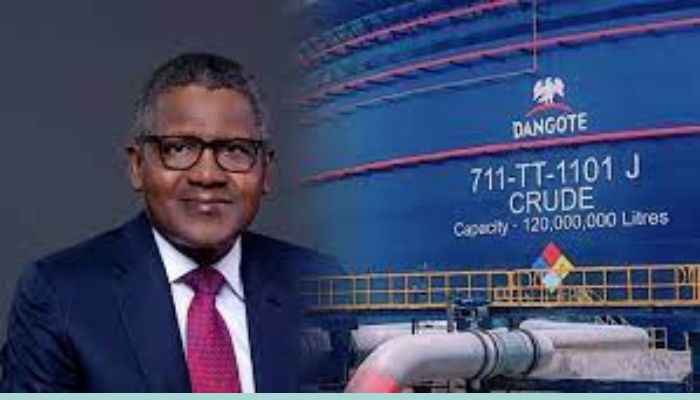
The price reduction follows a recent meeting between refinery chairman Aliko Dangote and President Bola Tinubu on December 6, during which the billionaire industrialist reaffirmed his commitment to maintaining competitive domestic fuel prices despite global market volatility and persistent cross-border smuggling.
The latest adjustment has triggered immediate market responses across Nigeria’s downstream petroleum sector. Several private depot operators, including A.A. Rano, NIPCO, and Aiteo, have begun aligning their rates with Dangote’s new pricing template, according to industry sources. The Nigerian National Petroleum Company Limited has also reduced pump prices twice in recent weeks, with retail rates in Abuja now ranging between N915 and N937 per litre.
Industry analysts suggest the frequent price adjustments reflect a fundamental shift in Nigeria’s fuel distribution landscape. The traditional marketers’ consortium model appears to be declining as individual operators negotiate directly with the refinery, enabling faster price adjustments and broader market penetration.
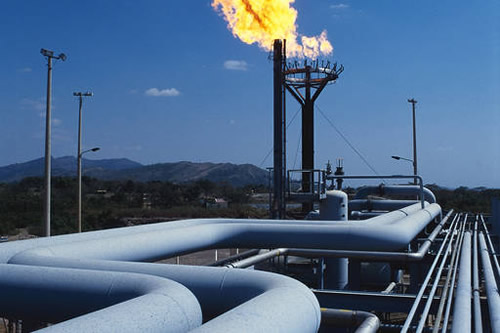
The $19 billion Dangote refinery, which commenced operations in 2023, has a processing capacity of 650,000 barrels per day, exceeding Nigeria’s entire domestic fuel demand. Company officials indicated the latest price cut aims to ease transportation costs for road transport operators and make the festive season more affordable for ordinary Nigerians.
Dangote noted that smuggling has declined, though not entirely stopped, as the refinery’s competitive pricing reduces arbitrage opportunities along Nigeria’s porous borders. The industrialist emphasised that the company is pursuing long-term market stabilisation rather than immediate investment recovery.
Transport sector stakeholders are expected to benefit significantly from the reduction, potentially translating to lower fares for passengers during the peak holiday travel period. The price cut also pressures fuel importers and NNPC Limited to further adjust their rates to remain competitive in Nigeria’s evolving petroleum market.
With retail prices potentially dropping to around N600 per litre at some filling stations for the first time in years, Nigerian consumers are witnessing tangible relief from fuel costs that have remained stubbornly elevated throughout 2025.
The refinery’s aggressive pricing strategy could reshape Nigeria’s downstream petroleum sector, ending decades of supply instability and fuel queues that have plagued Africa’s largest economy since the 1970s.