
It began with a number and a charge sharp enough to jolt Nigeria’s oil industry.
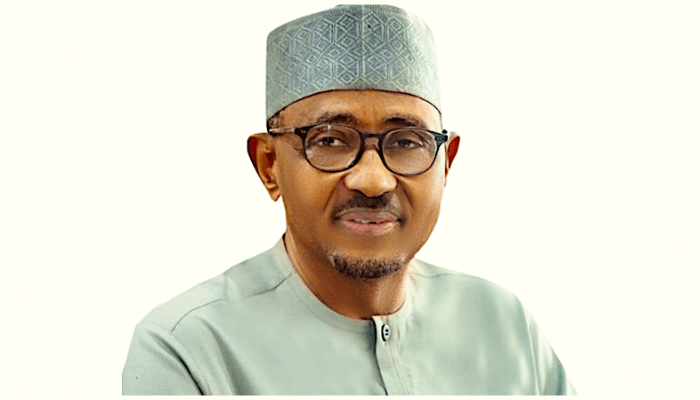
Ahmed Farouk is the pioneer and serving chief executive officer of the Nigerian Midstream and Downstream Petroleum Regulatory Authority NMDPRA, the powerful institution charged with regulating Nigeria’s midstream and downstream petroleum operations under the Petroleum Industry Act 2021.
An engineer by training, Farouk is a career oil and gas professional with nearly four decades of experience across Nigeria’s petroleum industry and international energy markets. He holds a degree in engineering technology from Southern Illinois University Carbondale in the United States and has attended several executive, management and leadership programmes across Europe and North America during a career spanning more than 35 years.
Farouk began his professional journey far from Nigeria’s oil fields, working as a logic board verification engineer at Apple Computer Inc. in Dallas, Texas. He later returned to Nigeria, where he rose through the ranks of the Nigerian National Petroleum Company system, occupying some of its most senior commercial and operational positions.
Farouk is a fellow of the Nigerian Society of Engineers, a member of the Institute of Electrical and Electronics Engineers in the United States, and a registered engineer with the Council for the Regulation of Engineering in Nigeria. Supporters describe him as a technocrat shaped by years of exposure to crude trading, product marketing and regulatory administration.
This depth of experience positioned him for the task of implementing the Petroleum Industry Act, which dismantled old regulatory structures and created the NMDPRA as a central authority for Nigeria’s midstream and downstream petroleum governance.
In December 2023, Farouk’s leadership was projected on a global stage when the NMDPRA told delegates at the United Nations Climate Change Conference COP28 that Nigeria could attract up to $575 billion in energy and infrastructure investments through regulatory reform, sustainability initiatives and private sector collaboration.
That reputation for technocratic authority would later collide with one of the most high-profile corporate figures in Africa, pushing Farouk from regulatory boardrooms into the heart of a national controversy.
A history of controversy
The most intense controversy of Farouk’s tenure erupted in 2025, when Aliko Dangote publicly accused him of conduct that went far beyond regulatory disagreement.
On Monday, Dangote alleged that Farouk spent about $5 million on the secondary education of his four children in Switzerland, an expenditure he described as economic sabotage and corruption. According to Dangote, the children Faisal Farouk, Farouk Jr, Ashraf Farouk and Farhana Farouk attended Montreux School, Aiglon College, Institut Le Rosey and La Garenne International School over a six-year period.
Dangote said his estimates covered tuition, living expenses, air travel and general upkeep, placing the annual cost per child at about $200,000. Multiplied across four children and several years, he argued, the figure rose to roughly $5 million. He also detailed what he described as tertiary education expenses, claiming that university-level tuition, upkeep and travel averaged $125,000 per year over four years per child, amounting to about $2 million for all four. He further alleged that Faisal Farouk completed an MBA at Harvard in 2025 for roughly $220,000
“Nigerians deserve to know the source of this money,” Dangote said, contrasting the figures with conditions in Sokoto State, where many parents, he noted, struggle to pay as little as ten thousand naira in school fees.
The allegations were accompanied by broader claims about regulatory conduct. Speaking at a press conference at the Dangote Petroleum Refinery in Ibeju Lekki, Lagos State, Dangote accused the leadership of the NMDPRA of colluding with international traders and oil importers to frustrate domestic refining. He claimed that import licences covering about 7.5 billion litres of petrol had been issued for the first quarter of 2026 despite the availability of significant local refining capacity.
“I am not calling for his removal, but for a proper investigation,” Dangote said. “If he denies it, I will publish what was paid and take legal steps to compel the schools to disclose the payments.”
From that moment, Farouk moved from being a powerful but largely technocratic regulator to the centre of a public storm, as regulatory disagreements over fuel imports and market control merged with public questions about personal wealth and accountability
The Dangote allegations were built on earlier tensions between the regulator and Nigeria’s largest private refinery. In 2024, disputes between the NMDPRA and Dangote Refinery had already spilled into the public arena after Farouk criticised local refineries, including Dangote’s, suggesting that some produced inferior products compared with imports. He also warned against what he described as the risk of monopoly if oil marketers were compelled to rely exclusively on one domestic refinery.
Dangote strongly rejected those claims, and the disagreement reached the National Assembly, where the House of Representatives adopted a motion urging Farouk’s suspension over what lawmakers described as unguarded and unprofessional comments. The call was later overtaken by procedural and legal arguments around tenure protection under the Petroleum Industry Act.
Political criticism has also followed him. In 2023, Haruna Garus Gololo, an All Progressives Congress chieftain in Bauchi State, publicly questioned Farouk’s appointment, arguing that his long NNPC career linked him to the failures of Nigeria’s state refineries.
“Ahmed Farouk was in the NNPC. He was part and parcel of why the refineries are not working,” Gololo said
By 2025, pressure intensified outside parliament. Coalitions of lawyers, civil society groups and religious leaders staged protests in Abuja, accusing Farouk of corruption, abuse of office and regulatory compromise. Some allegations echoed Dangote’s claims, including the diversion of millions of dollars to fund foreign education for his children and the alleged recruitment of his son into Oando, a company under NMDPRA regulation.
Protesters carried their demands to foreign missions, submitting petitions to the United States and Swiss embassies and calling for international scrutiny. “The allegations are serious and warrant a thorough investigation,” said Dan Okwa of the Concerned Young Professionals Network. “The Nigerian public deserves transparency and accountability.”
Defence and pushback
The NMDPRA has consistently rejected the accusations. In July 2025, the authority dismissed what it called a smear campaign against its chief executive, describing the allegations as baseless and politically motivated. It pointed to multiple layers of oversight, including audits, National Assembly scrutiny and the Office of the Auditor General.
Since assuming office, the agency said, Farouk has focused on implementing the Petroleum Industry Act and driving reforms that have helped attract nearly $20 billion in investment into the sector.
“These calls for resignation are filled with baseless declarations and no specific accusations. This alone shows their frivolity,” the Authority stated.
Institutional backing followed. The House of Representatives downstream committee later dismissed calls for Farouk’s removal, warning that ignoring the tenure protections in the Petroleum Industry Act would undermine investor confidence and legal certainty.
“The committee is not saying that investigating agency should not diligently carry out its function or prosecute any person found to have breached the law but the committee is completely against any idea that the PIA provisions can be dus-tbined and its provision ignored and that a regulatory body leader can be removed without due process and that once that culture is back, then it will send a wrong signal to the international committee of investors in the petroleum sectors to now feel that it is risky investing in a country where respect to the law can’t be guaranteed”
“So on that ground the Committee is dismissing those calls as not being in line with relevant provisions of the PIA which has physically made provisions for tenure duration and also the allegations about the budget of the agency are ridiculous because some of those allegations were way above the entire capitals provision in the budget, So if an amount that is alleged to have been misappropriated is above the budget capital provision, how could you have said someone stole what was not even exiting?”
The National Association of Nigerian Students, which had earlier accused Farouk of mismanagement and abuse of office, issued a public apology, admitting that its claims were based on unverified information.
“The allegations were based on unverified information. As the mouthpiece of over 40.2 million Nigerian students, both at home and in the diaspora, NANS is committed to upholding the values of truth, fairness, and constructive engagement.
“I sincerely apologise for any inconvenience or harm caused by the earlier statement and urge all stakeholders to remain focused on constructive dialogue and the shared goal of building a better Nigeria,” they wrote.
A profile still unfolding
For now, Farouk remains in office, presiding over one of Nigeria’s most sensitive regulatory institutions at a time of profound change in the energy sector. The allegations levelled by Africa’s richest businessman have not resulted in formal charges, but they have reshaped public perception and intensified scrutiny of regulatory power.
As Dangote put it, “What is happening amounts to economic sabotage.”